

Your website is losing you customers - and you don't know it!
'It' affects 96% of all websites.
'It' causes 1 in 8 users to click away.
'It' led to over 4000 lawsuits in 2024.
What is 'it'?.
Accessibility
Simply put, people with disabilities cannot access most sites.
Why?
Because of hidden barriers, like missing image descriptions, poor contrast & buttons that don't respond to keyboards - among many others.
The alarming part is, website owners are legally obliged to fix these, but most don't even know they exist.
That's where we step in.
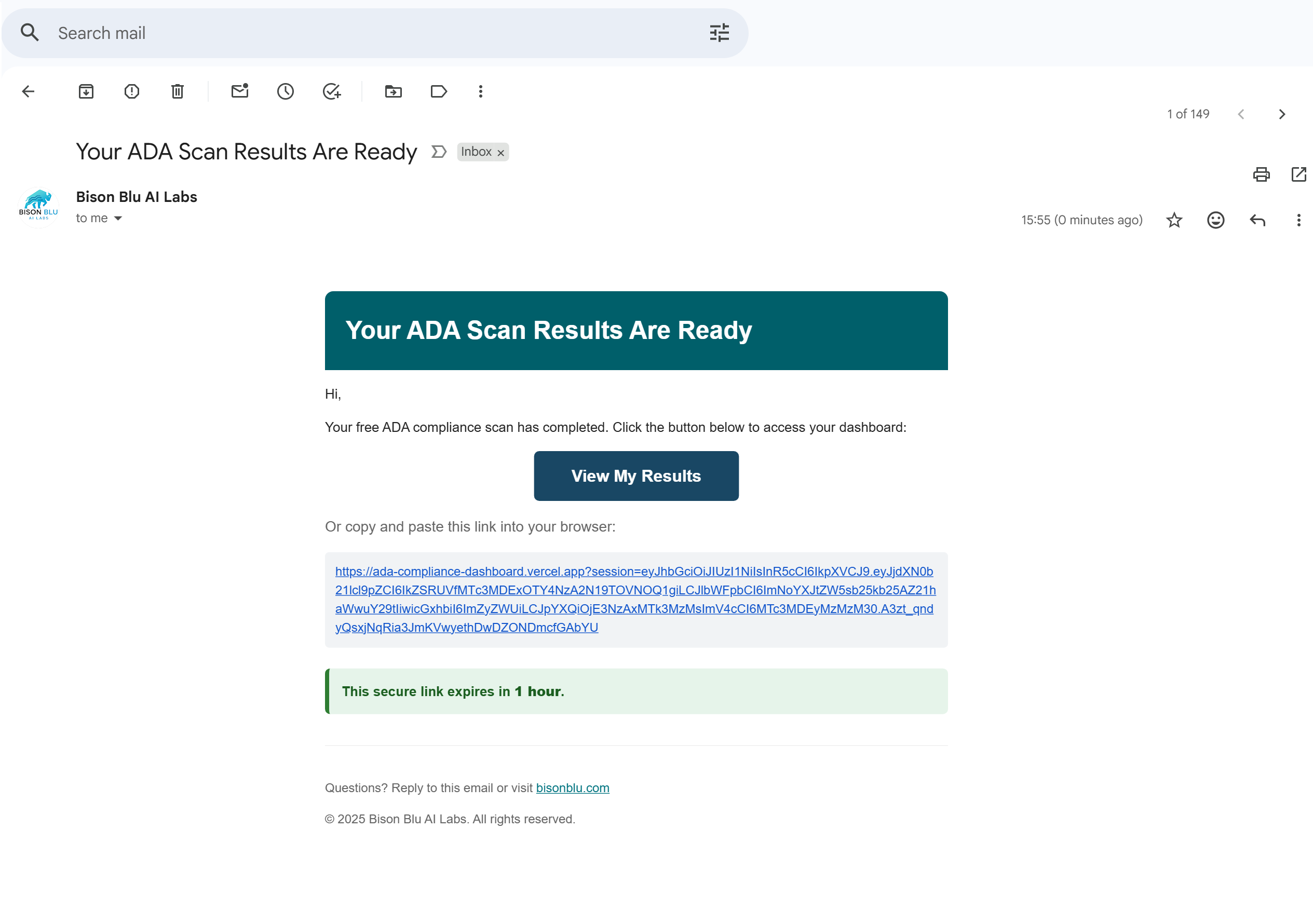
Our tool will tell you in minutes, exactly what needs fixing, and how to do it.
Best part is - it's FREE* and only takes 5 minutes to run.
Find out what's costing you customers...


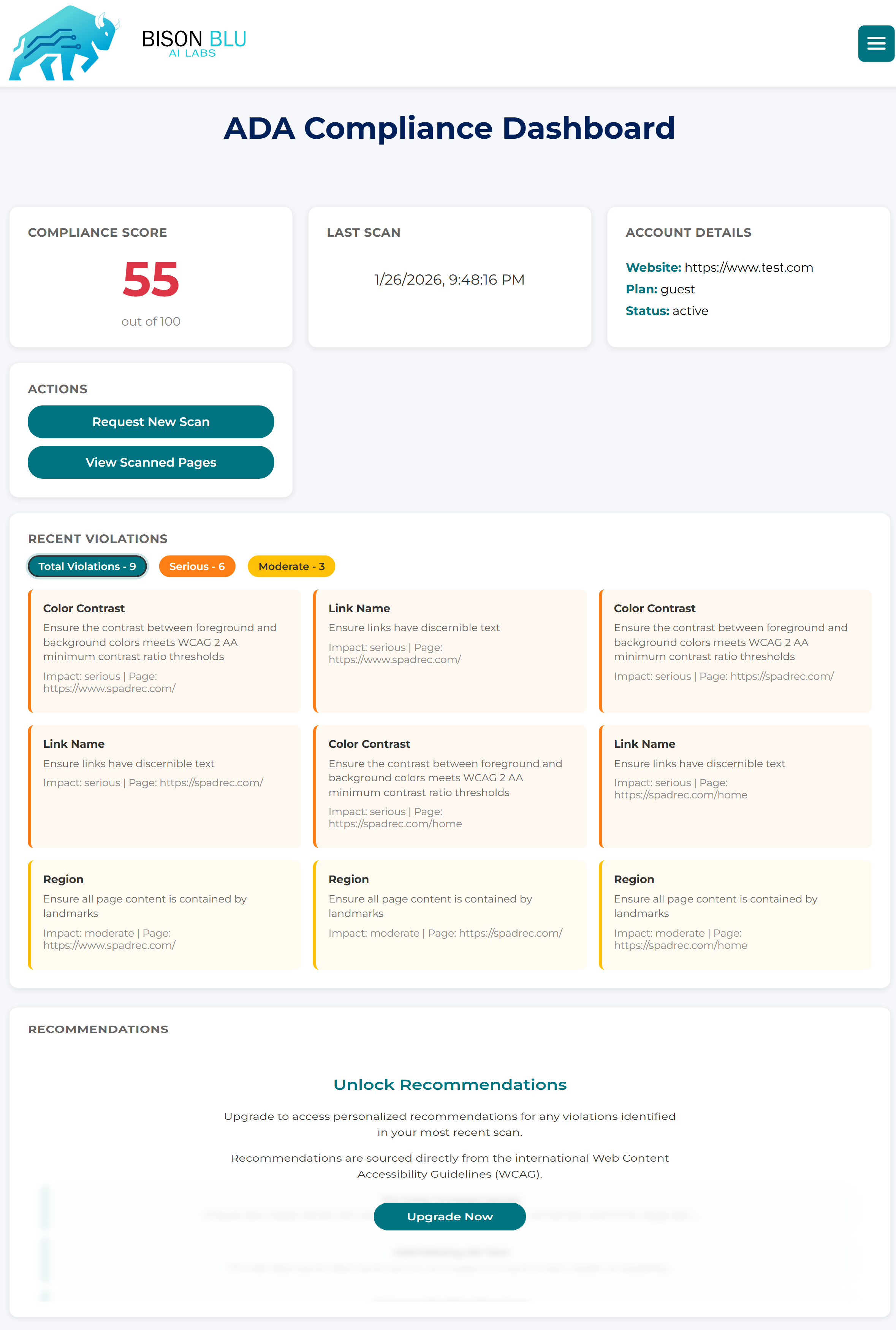

Need more?
We've got you covered
Actionable recommendations for the issues found on your site
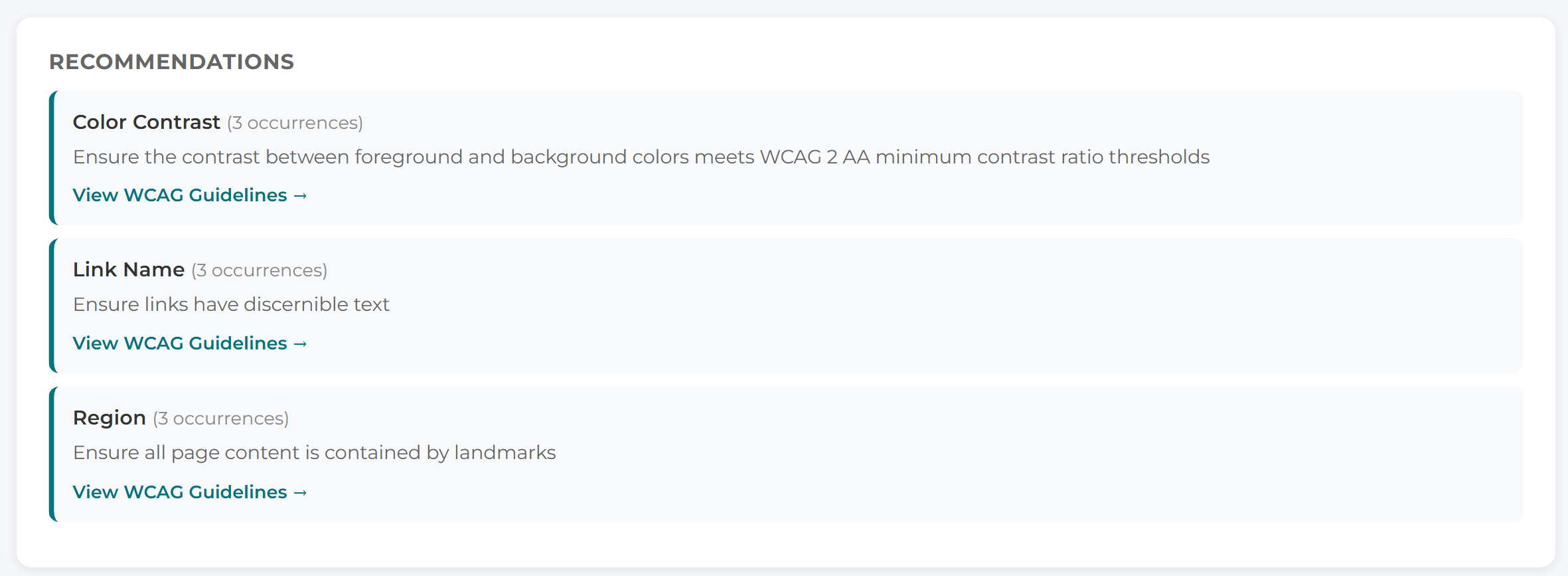
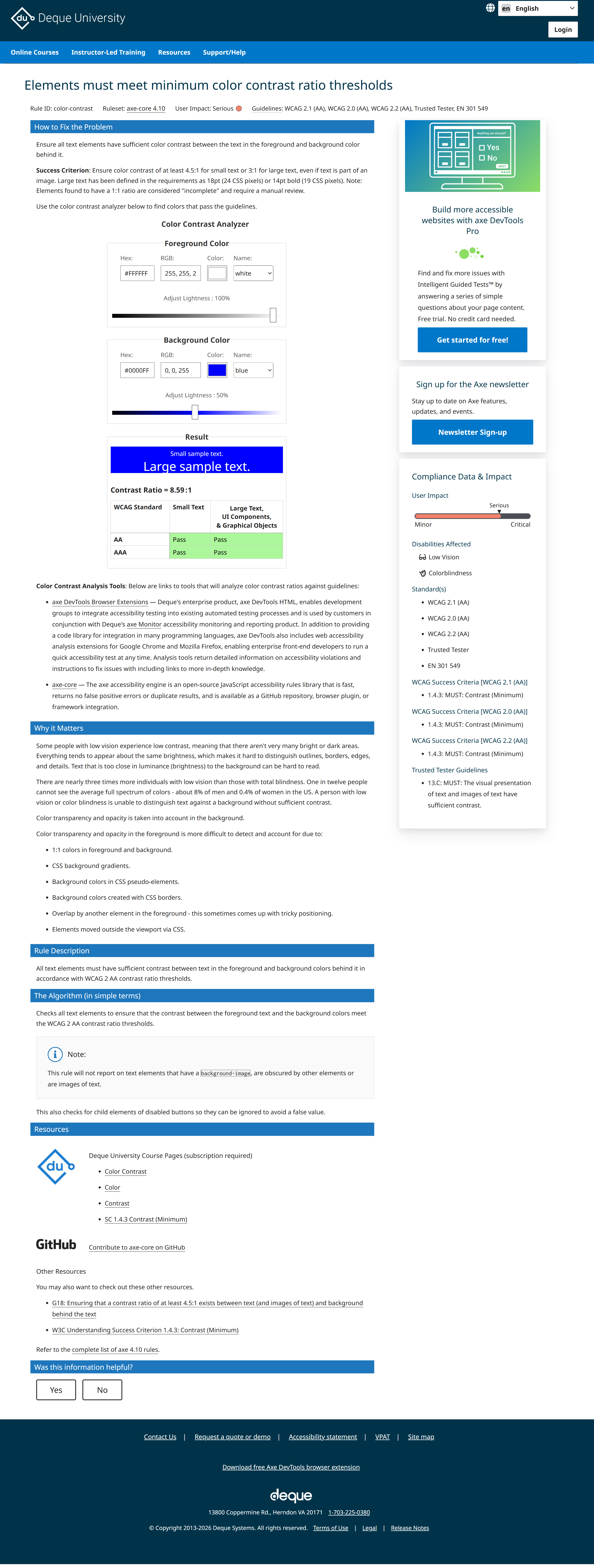
With links to the Deque website
Where you can find out exactly how to fix them
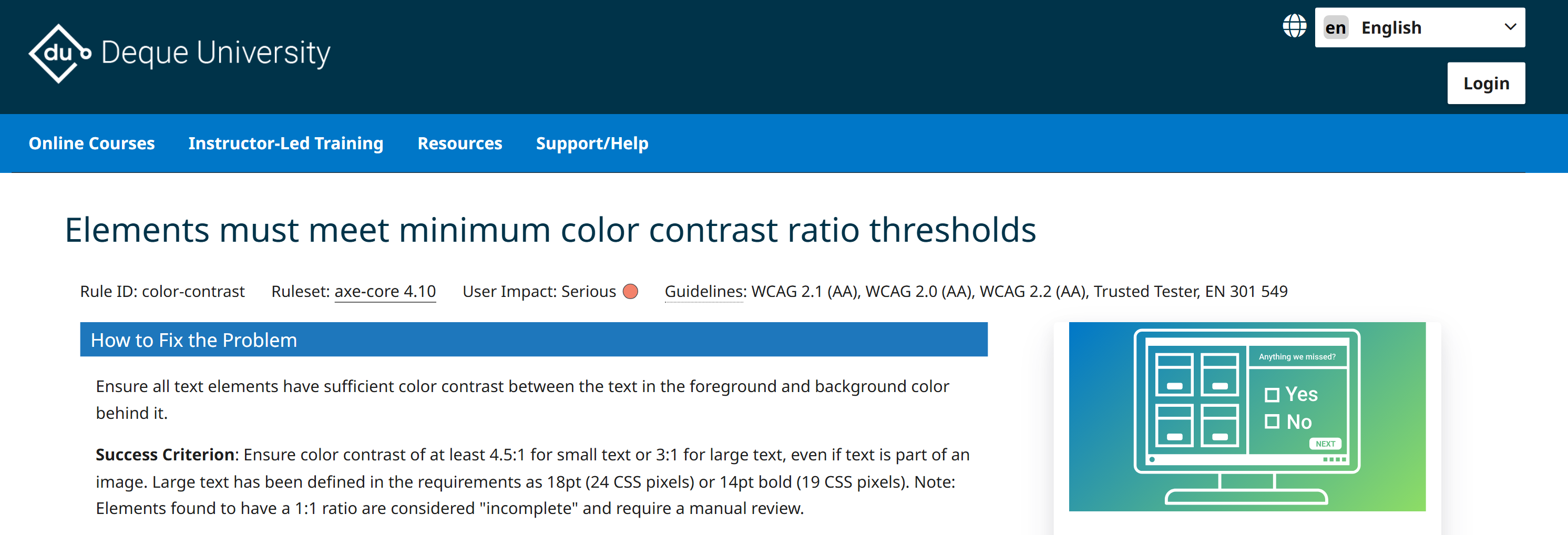
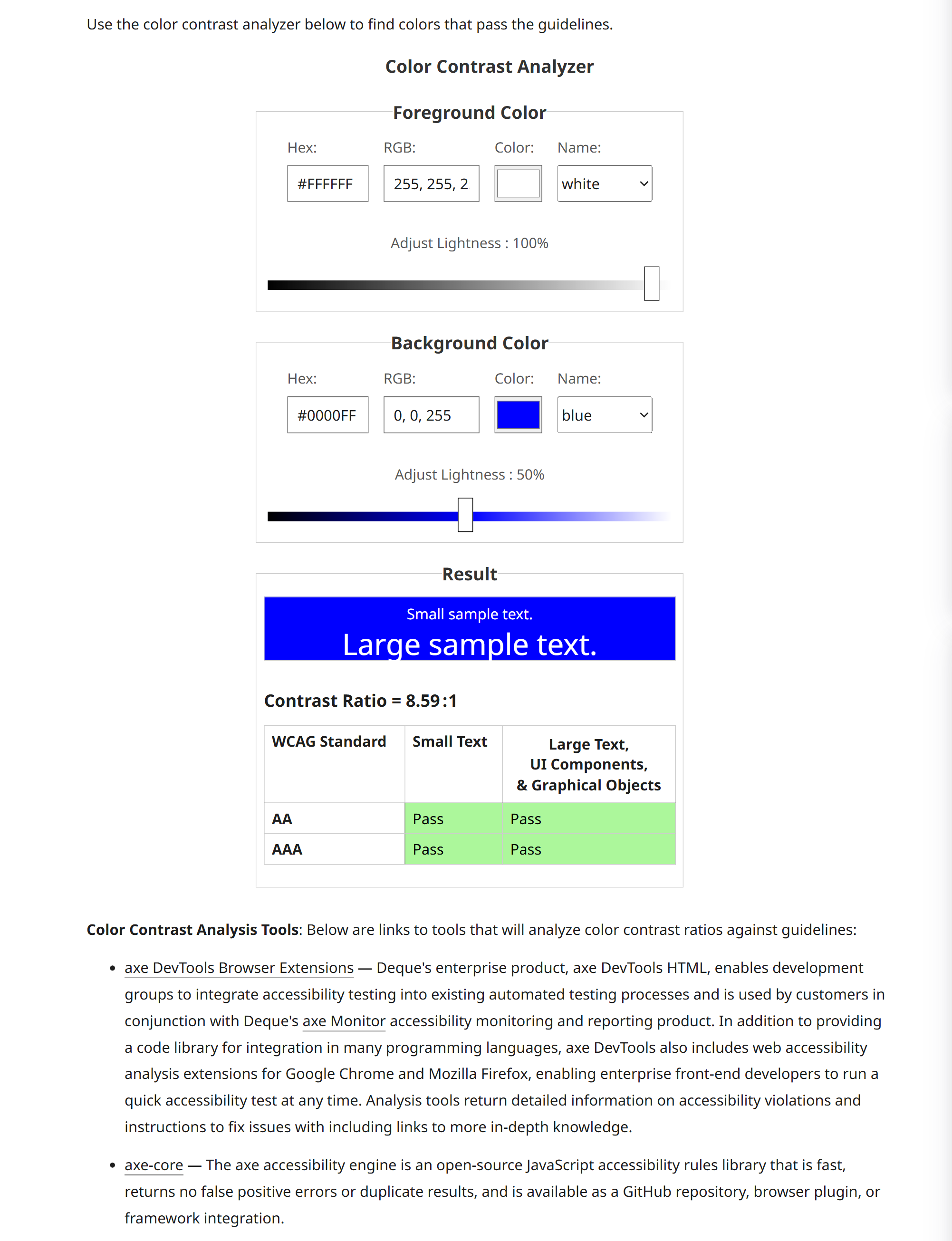
Using expert tools and tips. All provided for free
You can find out why it matters...
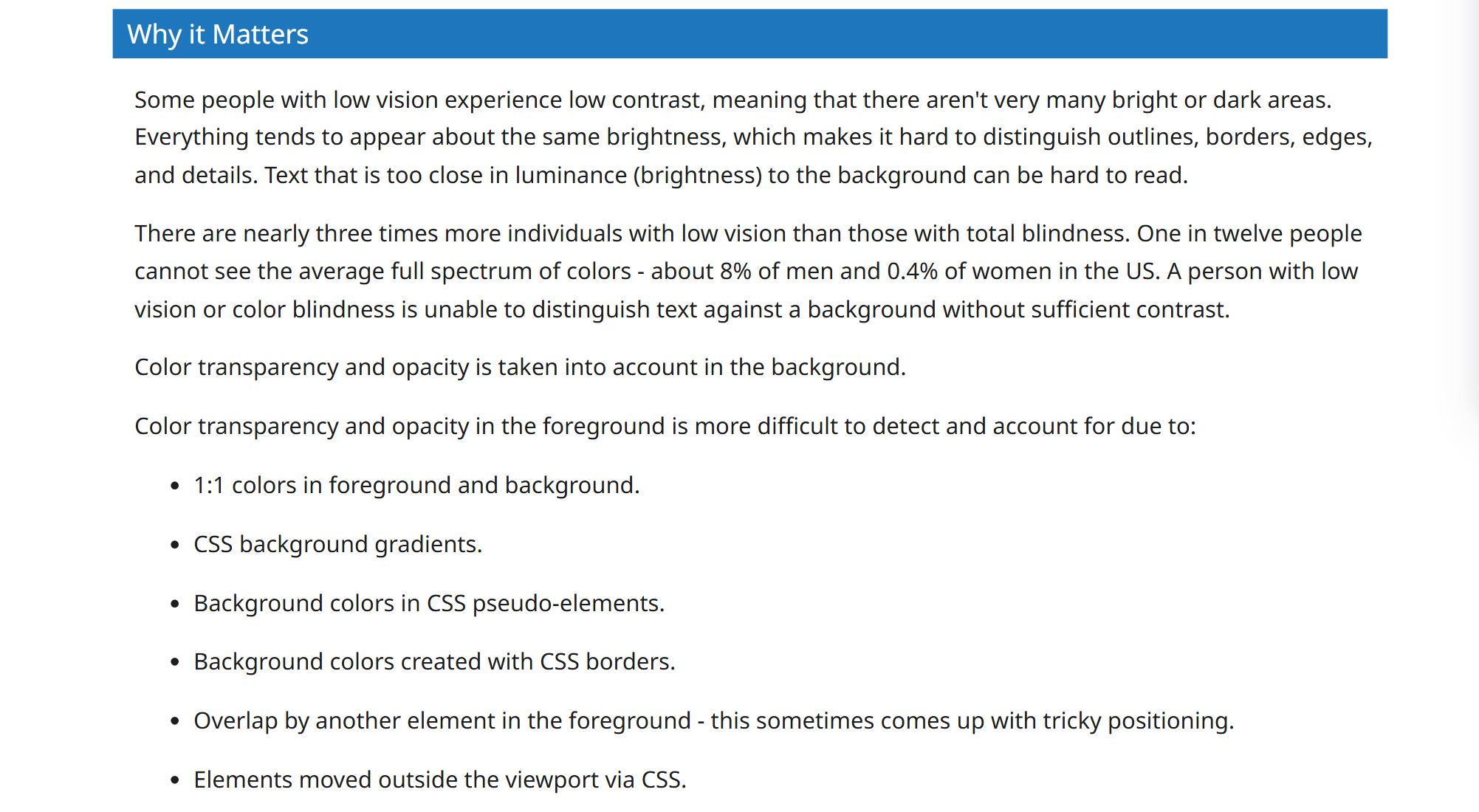
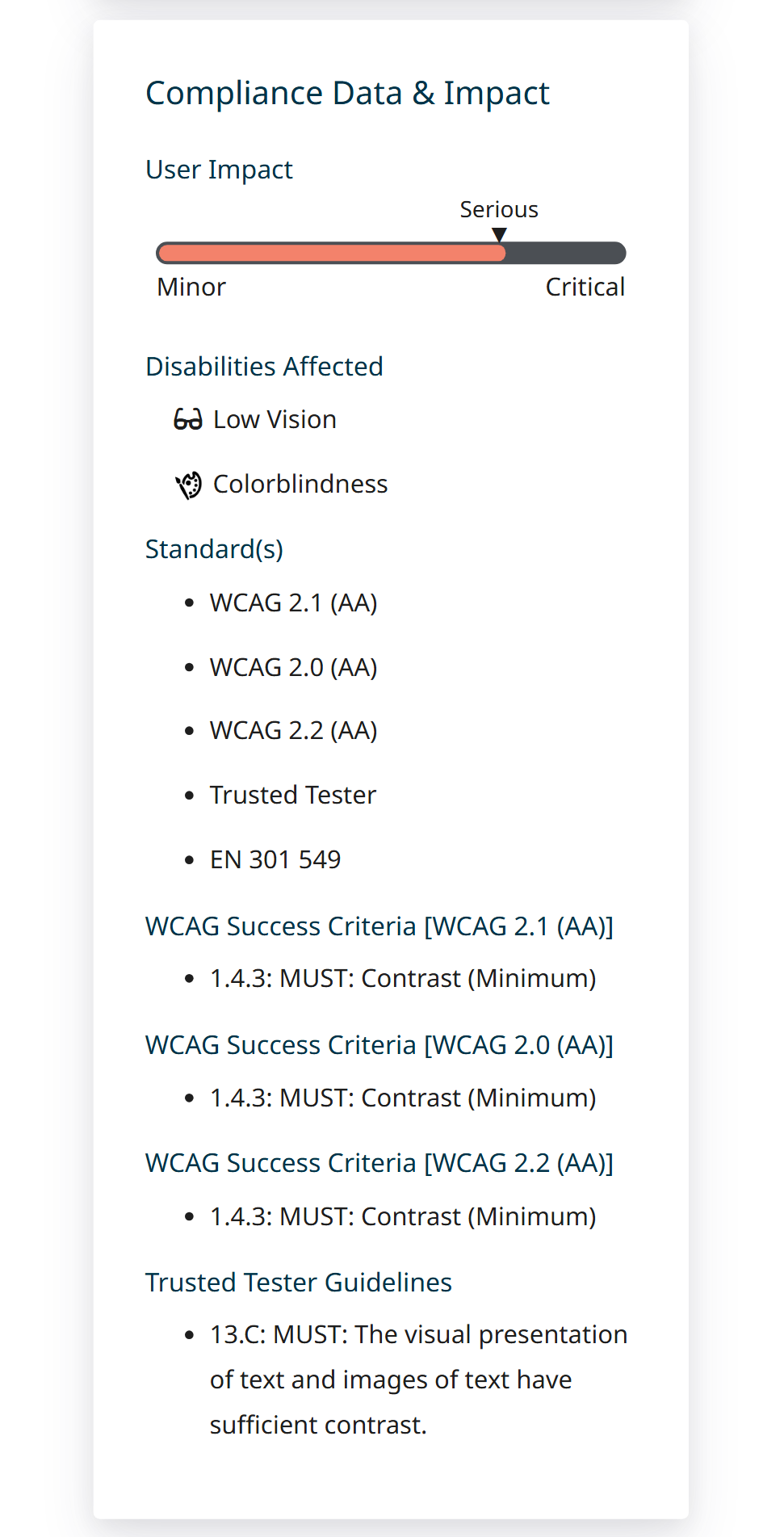
And even who it matters to!
Get all of this for as little as $ 25 for a FULL site scan

Want even MORE?
Absolutely!
AI-Enhanced Detection:
The Scanning Other Tools Can't Do
Traditional scanners follow rules. Our AI understands context.
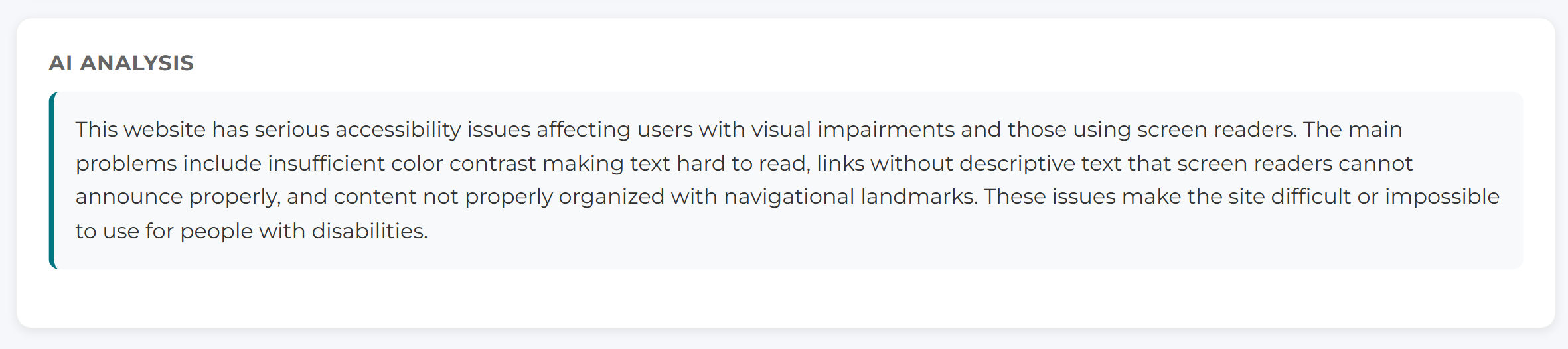
Powered by cutting-edge AI models, we analyze your site with human-like comprehension to catch what basic automated tools miss:
- Alt text that's technically present but functionally useless
- Color contrast failures in complex visual designs
- Navigation patterns that confuse users despite passing automated checks
- Vague link text and ambiguous interface elements
This is the technology gap between basic compliance scanning and $10,000 manual audits - now accessible to every website owner.
The AI upgrade fee?
$0
Everything's included for just $25:
- Complete automated site scan
- Detailed violation reports
- Fix-it-yourself implementation guides
- Advanced AI analysis (normally a premium feature)
One price. Complete insights. No surprises.
Wait, what? Fix-it-yourself? Where's the automatic fix?
Why We Don't Use Overlays
At Bison Blu AI Labs, we could offer automated overlay solutions. They're easy to sell, quick to implement, and many companies use them.
But we don't. Here's why we've deliberately chosen a different approach.
Automated "Overlay" Solutions Are Under Legal Scrutiny
The Promise vs. The Reality
Automated accessibility overlay solutions promise instant ADA compliance with a simple line of code. These products are marketed as quick-fix solutions that can make any website accessible without developer intervention.
The problem? Courts, advocacy groups, and accessibility experts have consistently found these solutions inadequate—and in some cases, they've made websites less accessible.
Why These Solutions Fail Legal Tests
1. They Don't Fix the Underlying Code
Overlay solutions apply a JavaScript band-aid over inaccessible websites without remediating the actual HTML, CSS, or structural issues.
Legal implication: Courts have ruled these superficial fixes don't meet ADA Title III requirements. In multiple federal cases, websites using overlays were still found to violate accessibility standards.
2. They Often Make Accessibility Worse
Ironically, many overlay solutions introduce new problems:
They interfere with screen readers users already rely on
They add confusing, redundant navigation elements
They override user-customized settings
They create keyboard traps and focus management issues
The National Federation of the Blind and over 700 accessibility advocates signed an open letter condemning overlay products, stating they "fail to provide equal access."
3. Courts Don't Accept Them as Compliance
Multiple federal court cases have explicitly rejected overlay solutions:
Websites using overlay widgets have been sued after installing the product
Courts consistently rule that overlays don't meet WCAG 2.1 Level AA standards
Using an overlay provides no legal protection and may demonstrate you chose an inadequate solution
4. False Sense of Security = Liability
Overlay vendors often claim their products provide "full compliance" or "legal protection."
The reality: They don't prevent lawsuits, don't satisfy ADA requirements, and give website owners false confidence while actual barriers remain.
Legal implication: Relying on these claims can be viewed as willful negligence, potentially increasing damages in accessibility lawsuits.
What Courts Actually Expect
The Department of Justice and federal courts have consistently held that:
1. Websites must be accessible to people with disabilities
2. Compliance means following WCAG 2.1 Level AA standards
3. The underlying code and content must be accessible, not just masked by overlays
4. Real accessibility requires human judgment, not just automated tools
The Bottom Line
Automated overlay solutions are under legal scrutiny because they don't fix underlying barriers, often create new problems, and courts have repeatedly rejected them as adequate compliance.
Accessibility isn't something you can install with a widget. It requires intentional design, proper code implementation, and ongoing commitment—which is exactly what courts expect under ADA Title III.
Our Approach: We provide honest scanning that identifies real issues requiring real fixes. We don't promise instant compliance because that doesn't exist. We give you the roadmap to genuine accessibility—not a legal band-aid that courts have already rejected.